Via ferrata in the Dolomites
Twelve routes from a first ferrata to a long mountain day. Compare them, then check what you need.
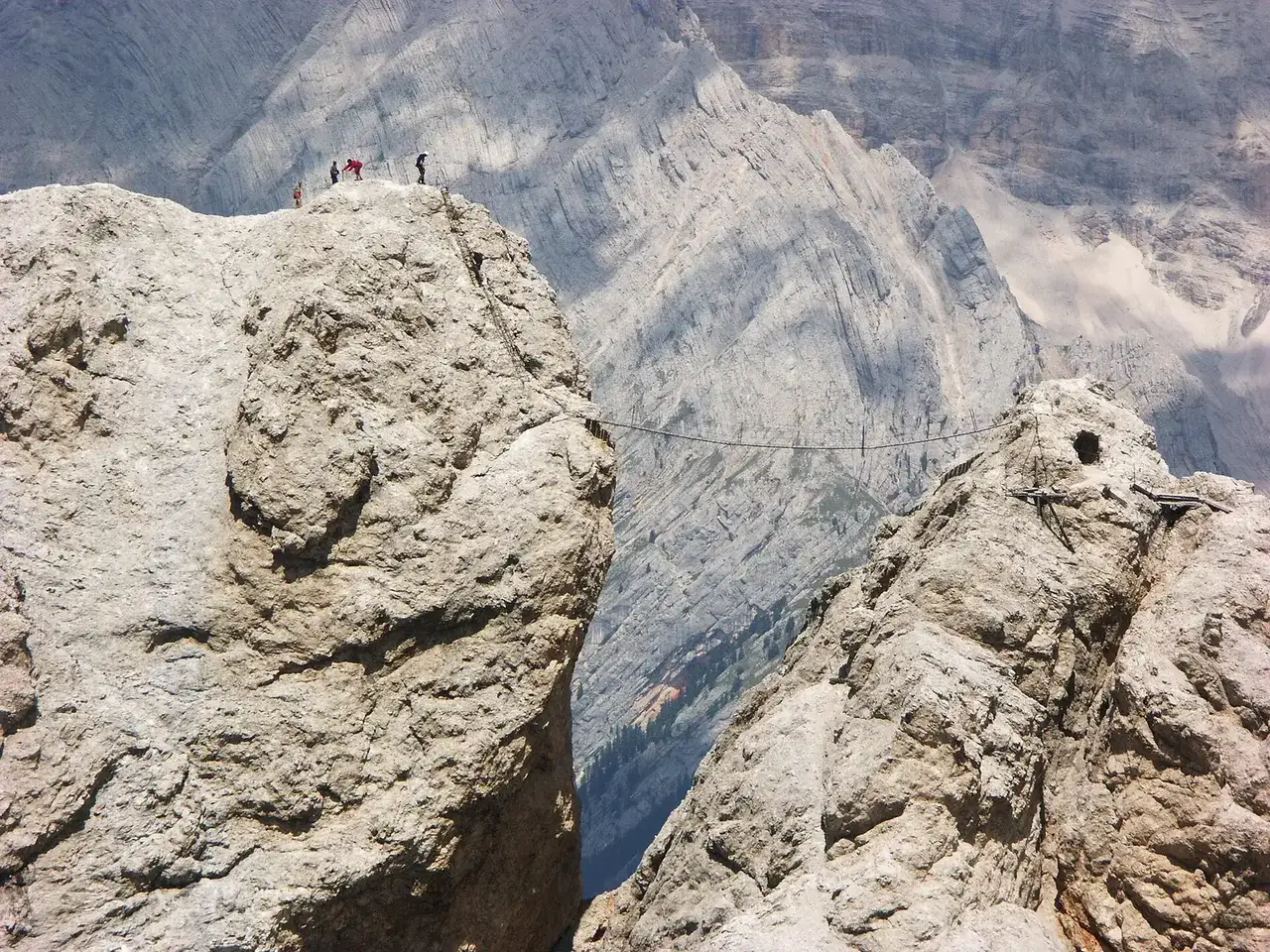

The bar shows every grade we found for a route. Sources often disagree, so we show the range.
First ferrata
Short, with a real steep part. You still need a kit and a steady head.
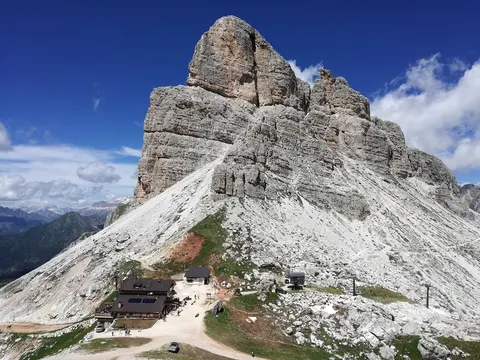
Ferrata Averau
A/B to B/C2 h 30 · 394 to 520 m
Cinque Torri. Chairlift from Bai de Dones. Rifugio Averau.
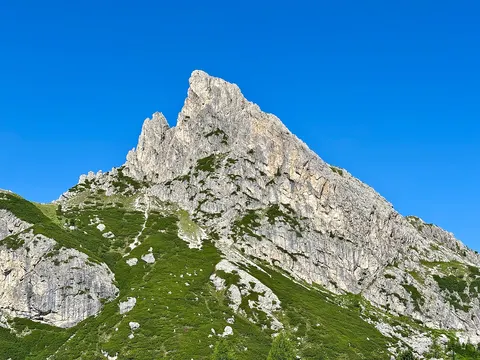
Ferrata Fusetti
A/B to B/C2 to 2 h 30 · 204 to 340 m
Sass de Stria. Starts at Forte Tre Sassi, with a tunnel: bring a headlamp. No hut.
A 2025 review says it is not for beginners.
You have done a few
Longer or more sustained. Plan the whole day.
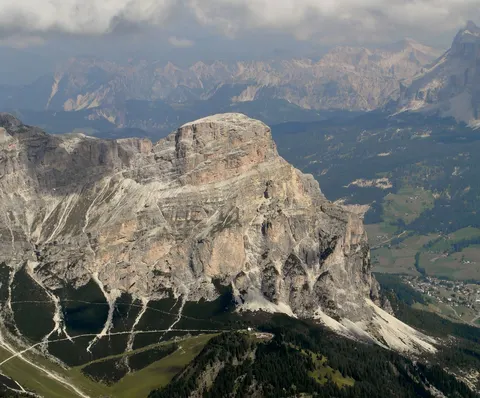
Ferrata Tridentina
C3 h 45 to 6 h · 630 to 704 m
Pisciadù, Sella. From Passo Gardena. Start early: queues form at the Exner tower. Rifugio Cavazza al Pisciadù.
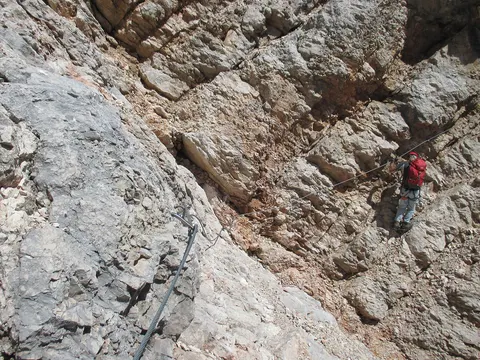
Ferrata Ivano Dibona
B to D8 to 9 h · 500 to 1,800 m
Cristallo. From Rio Gere, Son Forca chairlift. A long ridge day.
Upper cable car and Rifugio Lorenzi reported closed since 2016.
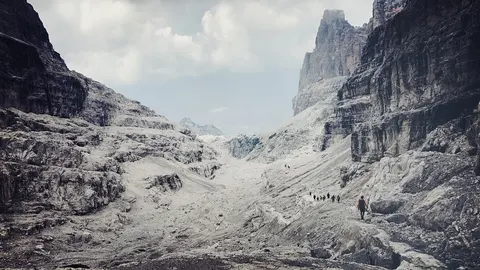
Via delle Bocchette Centrali
B to B/C9 to 11 h · 820 to 1,600 m
Brenta, near Madonna di Campiglio. From Vallesinella. Often part of a several-day traverse. Crampons may be needed on a snowfield. Rifugio Brentei.
Hard
Experience on ferratas needed. About 4 to 6 hours.
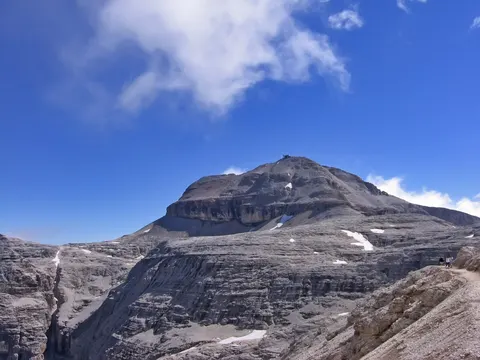
Ferrata Piazzetta
D to D/E5 to 6 h · 913 to 1,000 m
Piz Boè, 3,152 m. From Passo Pordoi. One report finds the lower third harder than its grade.
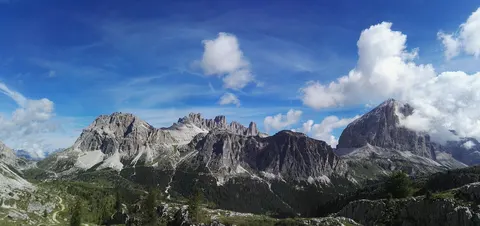
Ferrata Tomaselli
D to D/E5 h 30 to 5 h 45 · 300 to 1,050 m
Cima Fanis, 2,980 m. From Passo Falzarego. The way down is a C-grade ferrata.
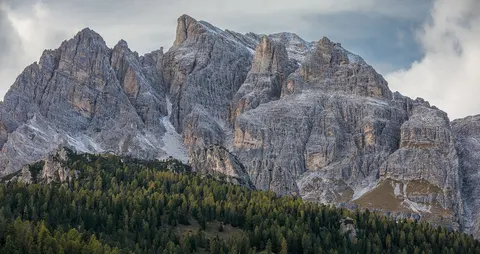
Ferrata Olivieri
C/D to Dabout 4 h · 430 to 770 m
Punta Anna, Tofana di Mezzo. Exposed. Longer if you add Aglio. Rifugio Pomedes.
Upper chairlift out of service in summer 2025. Check first.
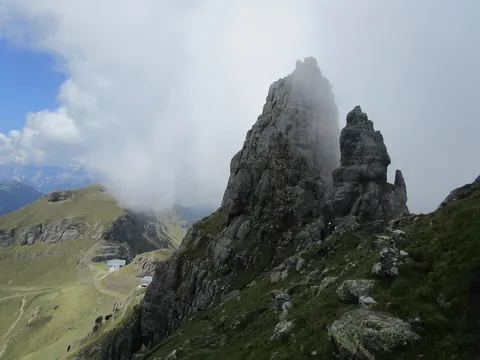
Ferrata delle Trincee
C/D to D5 to 6 h 15 · 670 to 700 m
La Mesola, Padon. Arabba cable car or Fedaia. Not when wet. Bivacco Bontadini.
Long and hard
Full mountain days, for those comfortable on C.
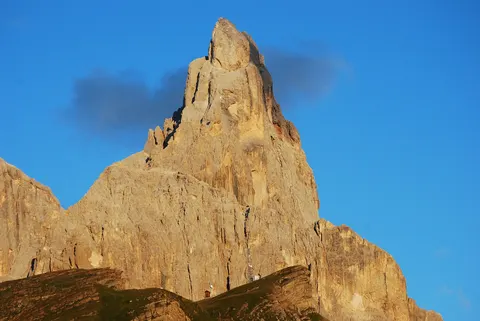
Ferrata Bolver Lugli
C6 h · 1,250 m
Cimon della Pala, Pale di San Martino. Col Verde lift. Figures from one source. Rifugio Rosetta.
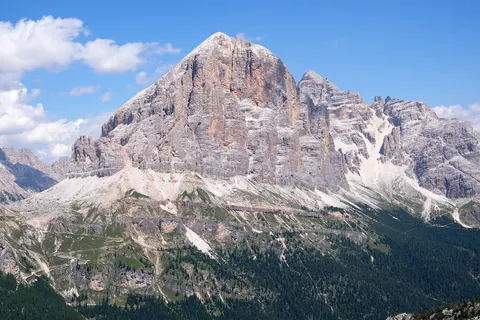
Ferrata Lipella
C to D8 to 8 h 30 · 1,200 to 1,500 m
Tofana di Rozes, 3,225 m. From Rifugio Dibona. Rifugio Giussani.
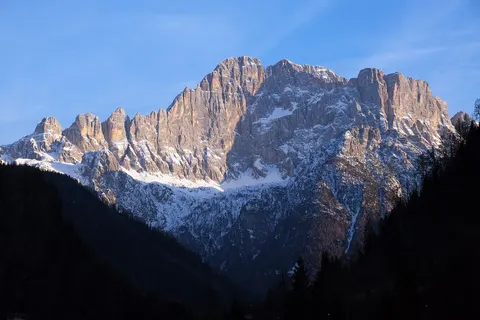
Ferrata degli Alleghesi
C to C/D6 to 11 h · 1,100 to 2,150 m
Civetta, 3,220 m. From Palafavera or Alleghe. Crampons may be needed early in summer. Rifugio Coldai.
Which via ferrata should you choose?
Never done one. Ferrata Averau is the usual first choice: short, close to a hut, and most sources call it easy. It still has a steep chimney near the start, which is why one source grades it B/C. Fusetti is about as short, but a review warns beginners off because of its friction climbing, so treat it as your second route.
You have done a few. Tridentina is the classic next step, and the most climbed, so start early. Ivano Dibona and the Bocchette Centrali are a different kind of hard: most sources grade the climbing lower, but they take most of a day.
You are comfortable on C. Look at the hours as well as the letter. Olivieri is hard but about 4 hours. Piazzetta and Tomaselli reach D/E but stay around 5 to 6 hours. Lipella and Alleghesi are full mountain days of 8 hours or more.
Via ferratas by area
- Cortina and FalzaregoAverau, Fusetti, Olivieri, Lipella, Tomaselli, Ivano Dibona
- Sella and PordoiTridentina, Piazzetta
- Arabba and MarmoladaDelle Trincee
- Civetta and Pale di San MartinoDegli Alleghesi, Bolver Lugli
- BrentaBocchette Centrali. Far to the west, near Madonna di Campiglio, so plan it as its own trip.
How via ferrata grades work
There is no single scale. The Schall letters run from A (easy) to E/F, and are common in Austria and in German-language guides. Swiss guides use K1 to K6. Italy and France have their own scales, and many Italian pages simply say "expert" or "very difficult".
The scales only match roughly. The German Alpine Club treats A/B as about K1 and C/D as about K4 to K5, and calls grades a rough guide: they mostly rate the hardest section, so a short C move is not the same as a long steep C wall.
That is why this page shows ranges. For Ferrata Averau we found easy, A/B, B and B/C. Read two sources before a route near your limit.
What kit do you need, and can you rent it?
- A helmet, a harness and a via ferrata set made to EN 958:2017.
- Those sets are rated for 40 to 120 kg, body and gear together. Below 40 kg, the German Alpine Club says to back up with a rope, which matters for children.
- The older 2011 standard was tested at 80 kg, so older sets are generally usable from about 50 to 90 kg.
Renting. The Cortina tourist board says kit can be hired from many rental shops in town, and the Lagazuoi info point at Passo Falzarego rents it too.
Our guide for hikers covers which Alta Via stages need a kit.
Weather, snow and rescue
Do not start if a storm is likely, start early, and leave the route if one builds. A steel cable is the last place to be in a thunderstorm.
There is no one date when the ferratas open. Snow and ice can stay on high routes: people turned back on Tomaselli in late August 2018 and met snow and ice on Ivano Dibona in June 2023. Check lifts and huts too. At Averau, both were closed by 15 October 2026.
Check that your insurance covers mountain rescue, including a helicopter.
With a guide, or on your own?
If you already know how to clip, and how your head reacts to exposure, an easy route does not need a guide. For a first day, a guide is the fastest way past the basic mistakes.
Italian regions set the rules on who may lead paying clients. Trentino, for example, does not let its medium-mountain guides take clients on routes that need all four limbs and gear such as a rope or crampons. If you hire someone, ask to see the licence, and check it with the regional Collegio delle Guide Alpine.
Questions people ask
What is the easiest via ferrata in the Dolomites?
Of the twelve here, Ferrata Averau. Most sources call it easy, though one grades it B/C.
What is the best via ferrata in the Dolomites?
It depends on the day you want. Tridentina is the most climbed, and Lipella is one of the big days. Start from the group that fits what you have already done.
What do the letters mean?
A is the easiest. The hardest route on this page reaches D/E. Grades mostly rate the hardest section, so read the whole route too.
Can I rent a via ferrata kit?
Yes. The Cortina tourist board says many shops in town rent it, and the Lagazuoi info point at Passo Falzarego does too.
Sources, read 4 November 2026
- Ferrata Averau: Cortina tourist board, Bergsteigen, Via-ferrata.de, Ferrataguide
- Ferrata Fusetti: Bergsteigen, Via-ferrata.de, dolomiti.it, Ferrataguide
- Ferrata Tridentina: Via-ferrata.de, Alta Badia, Val Gardena
- Ferrata Ivano Dibona: Bergsteigen, Via-ferrata.de, dolomiti.it
- Via delle Bocchette Centrali: Bergsteigen, Via-ferrata.de, dolomiti.it, Campiglio tourist board
- Ferrata Piazzetta: Bergsteigen, Via-ferrata.de, Grande Guerra
- Ferrata Tomaselli: Bergsteigen, Via-ferrata.de, Lagazuoi, Ferrataguide
- Ferrata Olivieri: Cortina tourist board, Via-ferrata.de, Bergsteigen, Dreizinnen
- Ferrata delle Trincee: Bergsteigen, Via-ferrata.de, Grande Guerra
- Ferrata Bolver Lugli: Bergsteigen
- Ferrata Lipella: Bergsteigen, Höhenrausch, Via-ferrata.de, dolomiti.it
- Ferrata degli Alleghesi: Bergsteigen, Via-ferrata.de, Cortina cultura
- Grades: German Alpine Club
- Kit: German Alpine Club, Bergzeit
- Rental: Cortina tourist board, Lagazuoi
- Guide rules: Province of Trento
Photos, from Wikimedia Commons, cropped
Rüdiger Kratz, CC BY-SA 3.0 · Robertk9410, CC BY-SA 4.0 · kallerna, CC BY-SA 4.0 · Llorenzi, CC BY-SA 3.0 · Evelyne Chassagneux-Bonini, CC BY-SA 4.0 · Riccardo Pasciucco, CC BY-SA 4.0 · Mauro742, CC BY-SA 3.0 · Beltero, CC BY-SA 4.0 · Ximonic (Simo Räsänen), CC BY-SA 4.0 · Clemens Stockner, CC BY-SA 3.0 · Svíčková, CC BY-SA 3.0 · kallerna, CC BY-SA 4.0 · kallerna, CC BY-SA 4.0


